

/
/
/
Ventilation silencers

Ventilation silencers

Ventilation silencers for reducing noise in duct systems

Ventilation silencers are an important part of any ventilation system, reducing noise levels in ductwork and around air handling units. They are used in supply and extract as well as industrial ventilation systems in offices, warehouses, retail and production buildings in Estonia, Latvia and Lithuania. Properly selected silencers help make the equipment run more quietly, improve comfort for staff and meet the acoustic requirements of the project.
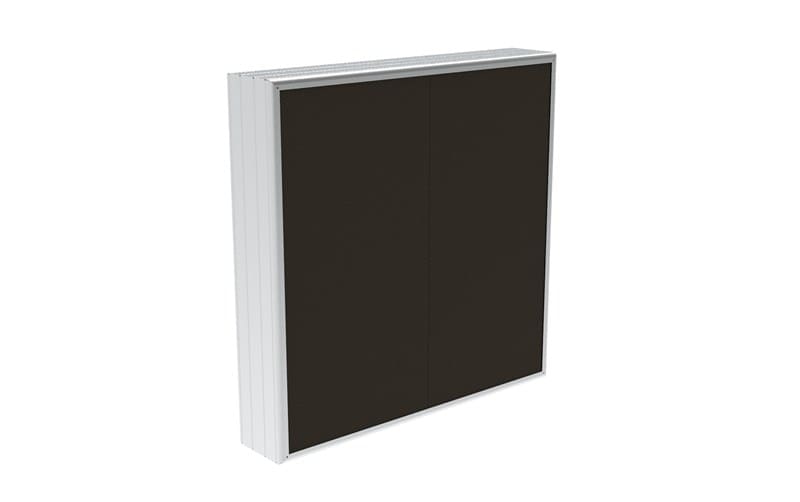
Sound attenuator PK
A ventilation silencer is an effective device for reducing the noise of various equipment.
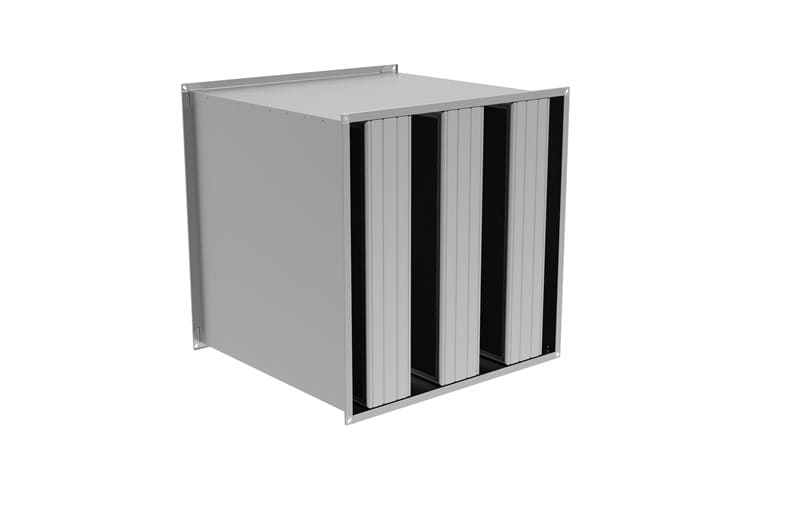
Sound attenuator PZ
Sound attenuator PZ Rectangular sound attenuators, type PZ are designed for air conditioning and ventilation systems.
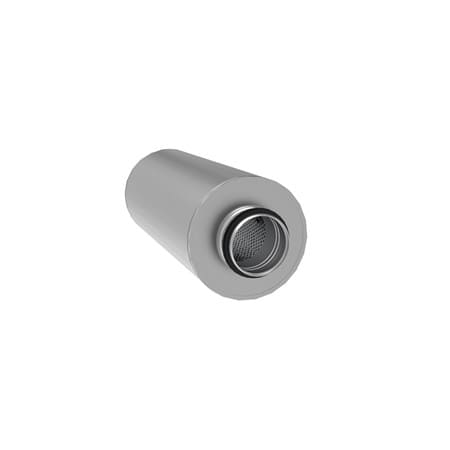
Sound attenuator PZC
Cylindrical sound attenuators, type PZC and PZC-J, are intended for use in air conditioning and ventilation systems.
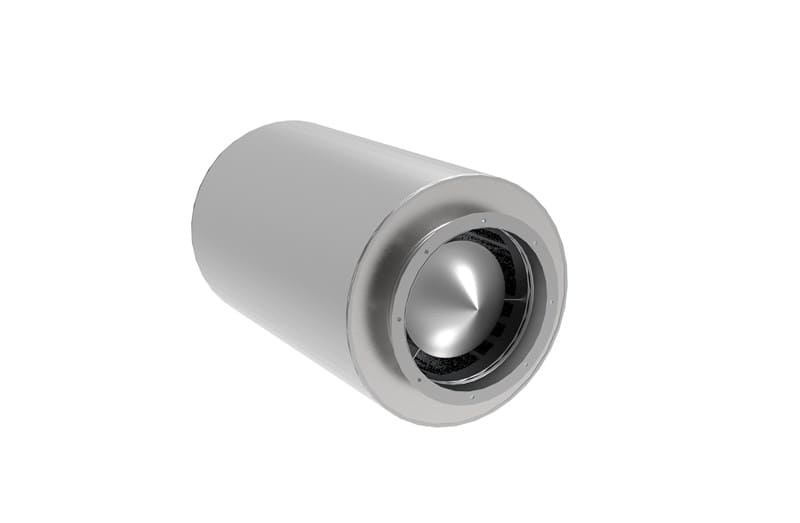
Sound attenuator PZM-T
Cylindrical sound attenuators, type PZM-T, are intended for use in air conditioning and ventilation systems.

Ventilation silencers for reducing noise in duct systems make supply and extract fans operate much more quietly without compromising airflow. They reduce noise levels inside ductwork and plant rooms, improving acoustic comfort in warehouses, production areas, offices and retail spaces and helping building owners comply with project acoustic requirements.

Key benefits:

  • Noise reduction in ductwork — attenuate noise generated by fans and air handling units before it is transmitted through ducts into occupied rooms.

  • Better comfort for people — provide a quieter working and shopping environment while maintaining the designed air exchange rate and indoor climate.

  • Compliance with acoustic standards — help achieve the required sound pressure levels in office, industrial and storage buildings according to the project specification.

  • Easy integration into existing systems — silencers can be installed in straight duct sections or directly after AHUs without major modifications of the ventilation system.

  • Energy-efficient solution — correctly selected dimensions and length provide significant noise reduction with only a limited additional pressure drop.

  • Wide range of applications — suitable for office buildings, shopping centres, logistics hubs and industrial facilities with increased requirements for low noise levels.

Ventilation silencers for reducing noise in duct systems are specially designed duct sections that weaken the sound wave travelling with the air stream. Perforated inner casings and sound-absorbing materials capture and dissipate noise from fans and air handling units while maintaining stable airflow and system pressure.

Details:

  • Sound-absorbing construction — a perforated inner shell and high-density infill convert sound energy into heat and reduce the amplitude of the noise.

  • Effective over a wide frequency range — the design is optimised to attenuate both low-frequency fan hum and high-frequency air turbulence noise.

  • Installation after fans and AHUs — silencers are typically installed at the discharge of supply and extract units and on branches leading to noise-sensitive rooms.

  • Limited impact on airflow — when length and cross-section are correctly calculated, the additional pressure drop remains within acceptable limits and the system delivers the required air volume.

  • Designed for industrial operation — heavy-duty silencers withstand continuous 24/7 operation, higher air temperatures and dusty air in industrial ventilation systems.

  • Simple maintenance — regular visual inspection of fixings and internal surfaces during scheduled ventilation service is usually sufficient.

To ensure that ventilation silencers for reducing noise in duct systems really solve the acoustic problem, it is essential to consider the type of building, the parameters of the ventilation system and the required noise reduction level in dB. Proper selection combines effective noise attenuation, energy efficiency and convenient installation into existing ductwork.

What we consider when selecting:

  • Type of building and application area — offices, retail areas, warehouses and production halls require different noise reduction levels and design approaches.

  • Required attenuation level — the target reduction in dB(A) defines the length, internal design and number of silencer sections.

  • Ventilation system parameters — air volume, air velocity, duct cross-section and allowable pressure drop determine the silencer size and type.

  • Duct layout and available space — straight duct lengths, height and width restrictions and access for maintenance are taken into account when choosing the solution.

  • Operating conditions — 24/7 operation, dust load and air temperature influence the choice of materials, protective coatings and casing design.

  • Integration with existing equipment and BMS — silencers are selected so that the ventilation system, controls and building management system continue to operate reliably with stable airflow.

Still have questions or need help?

Quality and environmental management Vent System Project OÜ follows the principles of the ISO 9001 certificate.

Ventilation silencers for reducing noise in duct systems – frequently asked questions

Silencers are installed in ductwork to reduce noise generated by fans, air handling units and air flow turbulence inside the ducts. They help to achieve comfortable noise levels in rooms and meet design or regulatory requirements, especially in offices, commercial spaces and industrial buildings.

Inside a silencer, air passes through sections lined with sound-absorbing material and perforated surfaces. Part of the sound energy is dissipated as heat, which reduces the sound level propagating in the duct. The design is optimised to attenuate the frequency range typical for fans and duct-borne noise.

Circular silencers are designed for round ducts, while rectangular silencers are used in rectangular duct systems. Their function is the same, but they differ in connection sizes, casing shape and sometimes internal baffle design. The choice depends on the type of ductwork used in the project.

Common locations are directly downstream of fans or air handling units, on main ducts before noise-sensitive areas (offices, meeting rooms) and on branches serving specific rooms. The exact position is determined during design to achieve effective noise reduction with acceptable pressure loss.

Silencers primarily reduce duct-borne noise from fans and equipment, which in turn lowers the overall sound level at grilles and diffusers. However, noise caused by excessive air velocity at terminal devices must be addressed by correct grille selection and airflow reduction, not by silencers alone.

Yes. Every silencer introduces additional pressure loss in the duct system. This must be taken into account when selecting the fan and sizing the ductwork. If the silencer is correctly selected in terms of length and cross-section, the impact on airflow is predictable and incorporated into the design.

Selection is based on duct size, required noise reduction and acceptable pressure drop. Ideally, you use the manufacturer’s acoustic and aerodynamic data together with project information on current noise levels. In practice, designers or equipment suppliers typically assist in choosing a suitable duct silencer.

Not necessarily. An excessively long silencer may create too much resistance and negatively affect system performance. The goal is to balance the desired noise attenuation with acceptable pressure loss and available installation space.

Silencers have no moving parts, but dust and dirt can accumulate on internal surfaces over time. Periodic inspection and cleaning, especially in dusty systems, are recommended to maintain performance. Under normal conditions, their service life is comparable to that of the ductwork.

Price depends on size (diameter or cross-section), length, acoustic performance, materials and order quantity. Ventilation silencers can be supplied for projects across Estonia and, where required, also to Latvia and Lithuania as part of complete ventilation equipment deliveries.
Call me back
Leave a request and our manager will respond to you within the next hour.
Перезвоните мне
Оставьте заявку и наш менеджер ответит вам в течение ближайшего часа.