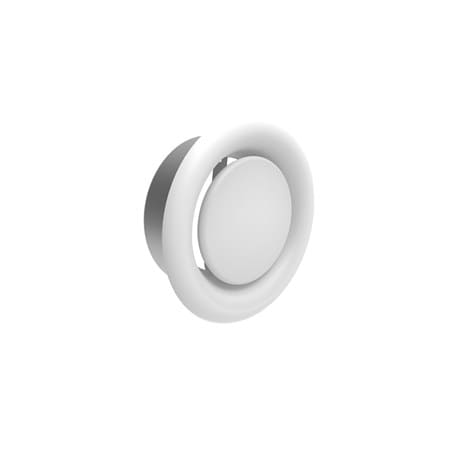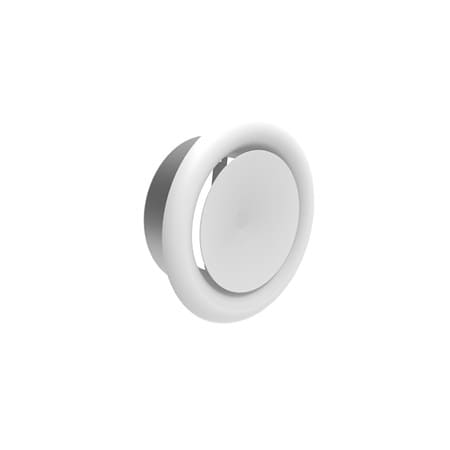
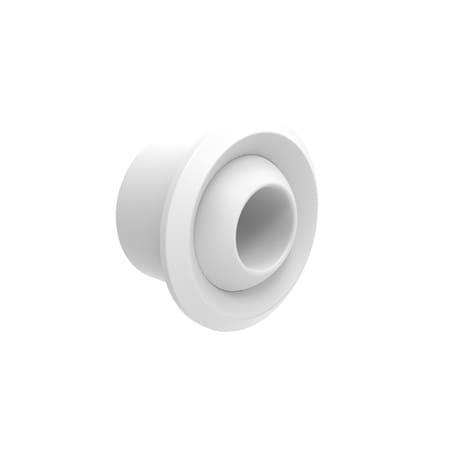
Ventilation diffusers for ceilings and walls provide uniform supply and extract air distribution in different types of spaces. They help avoid draughts, hot spots and dead zones, maintaining a comfortable indoor climate for occupants and supporting reliable ventilation system performance. These solutions are particularly suitable for offices, warehouses, retail and industrial premises with continuous operation.
Key benefits:
Even air distribution — the design of ventilation diffusers directs the air along the ceiling or wall, ensuring smooth mixing of supply air with room air.
Reduced draught risk — correctly selected diffusers keep air velocities low in the occupied zone, improving comfort for people.
Stable climate in large rooms — support the specified temperature and air change rate in open-plan offices, shops and storage areas.
Aesthetic integration into interiors — ventilation diffusers for ceilings and walls blend neatly with suspended ceilings and wall finishes.
Compatibility with different systems — suitable for supply, extract and combined ventilation systems with various air distribution concepts.
Easy maintenance — removable front panels make cleaning and access to connections or additional components behind the diffuser straightforward.
Ventilation diffusers are installed in ceilings or walls of supply and extract systems and act as the final air distribution element. The shape of the body and the arrangement of slots or perforations define the direction and velocity of the air jet, providing gentle mixing of supply air with room air and preventing local overheating or overcooling zones.
Details:
Air distribution within the diffuser body — air from the duct enters the diffuser plenum, where it is evenly distributed around the perimeter.
Formation of the air jet — special slots, holes or diffuser elements guide the air along the ceiling or wall, increasing the effective coverage area.
Induction and mixing with room air — by inducing room air into the jet, ventilation diffusers quickly equalise temperature and other indoor climate parameters.
Operation in supply and extract mode — different types of ventilation diffusers for ceilings and walls can be used for both air supply and air exhaust.
Low noise and controlled turbulence — optimised diffuser geometry reduces aerodynamic noise and prevents excessive turbulence in the air stream.
Maintaining ventilation balance — correct selection of the number and size of diffusers helps keep the designed airflow rates in all building zones.
When selecting ventilation diffusers for ceilings and walls, it is essential to consider the type of building, ceiling height, air distribution concept and acoustic requirements. Properly chosen models provide efficient air delivery and extraction without draughts or excessive noise while preserving the desired appearance of ceilings and walls.
What we consider when selecting:
Room function and layout — open-plan offices, sales areas, warehouses and production zones require different diffuser layouts and air distribution patterns.
Ceiling height and air volume — these parameters influence diffuser type, throw pattern and the required capacity of each ventilation diffuser.
Required air flow direction — models with horizontal, vertical or combined discharge are selected according to the project design.
Noise limits and acoustic criteria — where low noise levels are critical, diffusers with optimised geometry and reduced outlet velocities are preferred.
Mounting surface and duct connection — suspended ceilings, solid slabs or walls and the chosen duct connection method are taken into account.
Serviceability and access — we plan for convenient access to diffusers for regular cleaning and for adjustment of air distribution elements if needed.


Quality and environmental management Vent System Project OÜ follows the principles of the ISO 9001 certificate.
A ventilation plafond is a decorative ceiling element for supply or extract air that combines the function of a diffuser with the look of a ceiling panel. Compared to a standard ventilation diffuser, a plafond offers a more refined appearance, hides technical components and blends better with office, retail or public interiors.
Ventilation plafonds and ceiling diffusers are widely used in offices, banks, shops, shopping centres, healthcare and education buildings – anywhere a comfortable indoor climate and a clean ceiling appearance are both important. In warehouses and industrial halls, more technical diffusers are usually used, but plafonds are often installed in reception areas, offices and showrooms of industrial sites.
Yes, most ventilation plafonds and ceiling diffusers for commercial buildings are designed for installation in standard suspended ceiling systems such as Armstrong. Their dimensions usually match the ceiling tiles (for example 600×600 mm), so a regular tile can be replaced by a ventilation plafond with minimal modifications.
Many plafond and ventilation diffuser ranges are designed to work with both supply and extract air. Using the same product family for supply and extract helps to keep a consistent ceiling design. However, the airflow and operating mode must always follow the manufacturer’s recommendations to maintain proper air distribution and comfort.
The size and allowable airflow depend on the room area, ceiling height, overall air distribution concept and acceptable air velocity. Selection is based on manufacturer’s data or design calculations that take into account airflow, pressure drop and sound level. If you send us basic ventilation data or drawings, we can recommend suitable ventilation diffusers and plafonds for your projects in Estonia (and, where needed, Latvia and Lithuania).
Ventilation plafonds and ceiling diffusers are usually made of steel or aluminium, and in some cases of stainless steel or composite materials. Powder-coated steel is a good choice for most offices and retail spaces, aluminium is lighter and more corrosion-resistant, while stainless steel is recommended in areas with higher humidity or strict hygiene requirements.
If correctly selected, ventilation diffusers and plafonds distribute air evenly and help to avoid draughts in the occupied zone. Forcing too much air through a single diffuser can significantly increase noise and air velocity. That is why acoustic data and maximum recommended airflow should always be considered, especially in open-plan offices and representative areas.
In most cases it is enough to remove visible dust from the surfaces with a soft cloth and mild detergent at regular intervals. For more thorough maintenance, the front panel can be removed and internal surfaces cleaned from accumulated dust. In busy or dusty environments, inspection and cleaning at least every 6–12 months is recommended.
In many situations existing ceiling diffusers can be replaced by decorative ventilation plafonds if the connection dimensions and airflow ranges are compatible. Before replacement, it is advisable to check the ventilation design data to ensure that the new plafond will provide correct air distribution and will not create excessive pressure drop or noise.
Our primary market is Estonia, and we also supply ventilation diffusers and plafonds to Latvia and Lithuania. Delivery times depend on stock availability and order volume: standard products are often available for quick shipment, while larger orders and special executions are delivered according to an agreed schedule.
VENT SYSTEM PROJECT OÜ (11720522), Ida-Viru County, Narva City, Narva, Oru tn 4, 20203
VENT SYSTEM PROJECT OÜ (11720522), Ida-Viru County, Narva City, Narva, Oru tn 4, 20203