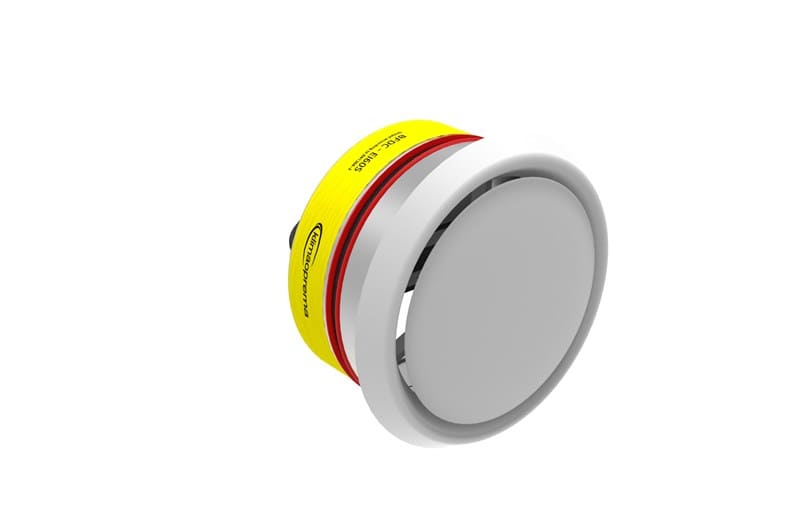
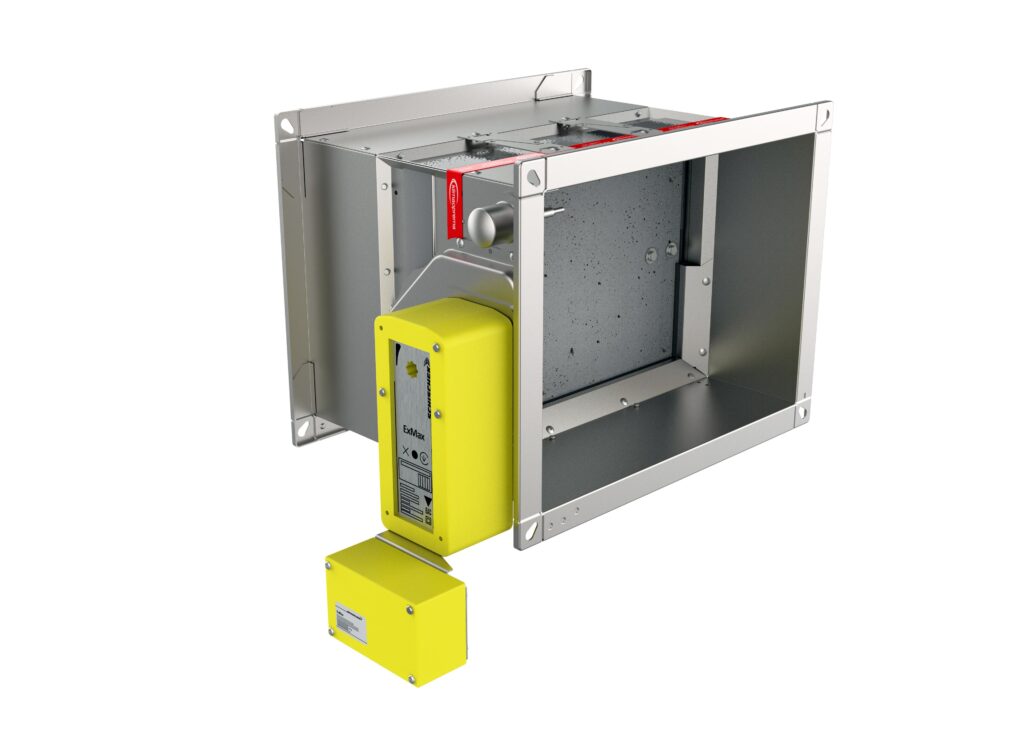
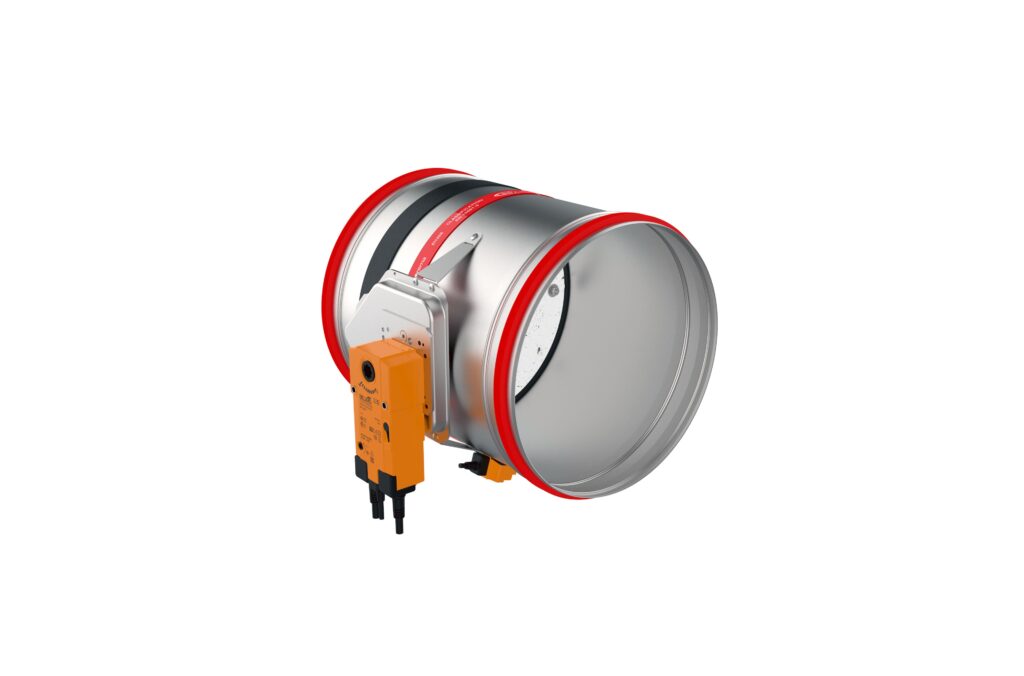
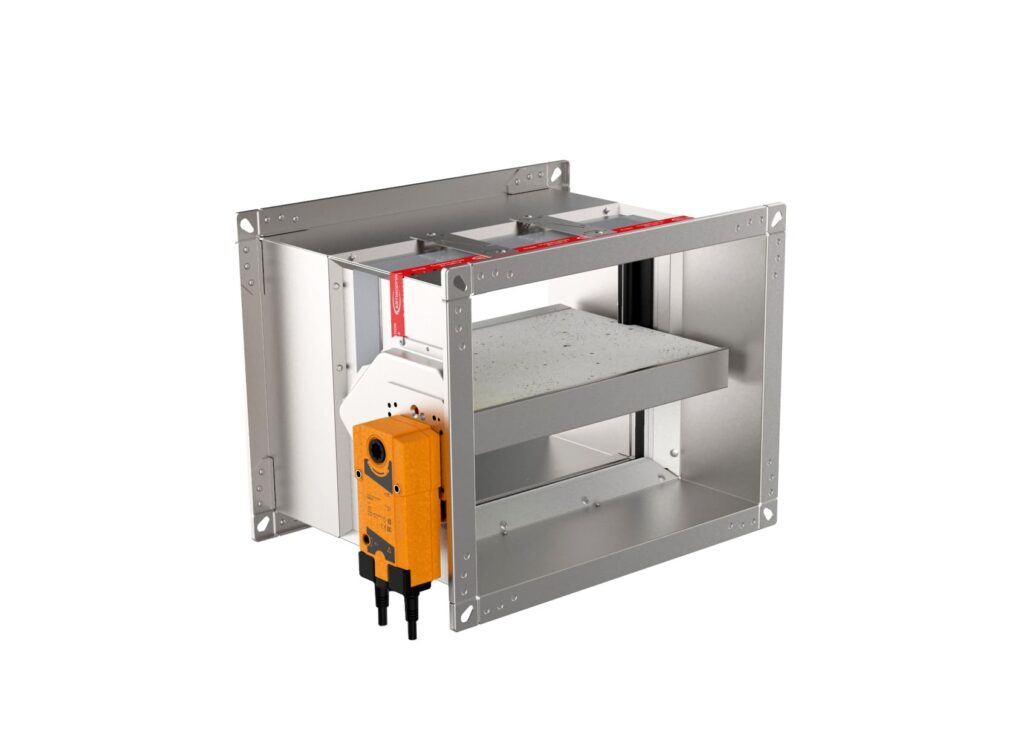
Smoke dampers for fire ventilation systems provide controlled removal of smoke and hot gases from buildings during a fire. They help maintain visibility, reduce temperatures in the upper layer and keep escape routes as smoke-free as possible, giving occupants more time to evacuate safely. Properly designed smoke control systems with smoke dampers are a critical part of the overall fire safety concept of a building.
Key benefits:
Protection of escape routes — when smoke dampers open, smoke levels in corridors, stairwells and car parks are reduced, improving evacuation conditions.
Control of smoke and heat layer — extracting smoke and combustion products helps limit the descent of the smoke layer and reduces thermal stress on structures.
Support for fire brigade operations — controlled smoke extraction improves visibility and working conditions for firefighters inside the building.
Compliance with fire safety codes — certified smoke dampers for fire ventilation systems help meet national standards and regulations for smoke control.
Integration with building automation — dampers can be operated by fire alarm signals, smoke detectors and the ventilation control system.
Flexible use across different building types — suitable for shopping centres, warehouses, car parks and other commercial buildings with various smoke control concepts.
Smoke dampers for fire ventilation systems are typically installed in vertical smoke shafts, branch ducts on each floor and in zones where smoke must be extracted. Under normal conditions they are usually closed and do not affect day-to-day ventilation; in the event of a fire they open automatically or on command, creating a defined path for smoke to the smoke extract fans.
Details:
Standby position in normal operation — smoke dampers remain closed so that they do not interfere with standard HVAC functions.
Opening on fire alarm — activation of the fire alarm or smoke detectors triggers the opening of smoke dampers in the affected zones.
Coordination with smoke extract fans — smoke extract fans start at the same time, generating negative pressure and drawing smoke out of the building.
Zonal control and staging — smoke dampers can be opened selectively by floors or fire zones, allowing the designer to control smoke movement and pressure distribution.
Position monitoring and feedback — end switches or position sensors report to the control system whether each smoke damper is open or closed.
Regular functional testing — damper design allows periodic test cycles to verify correct operation without disrupting building use.
When selecting smoke dampers for fire ventilation systems, it is essential to consider building layout, escape routes, the chosen smoke control strategy and applicable fire codes. The correct damper type, size, fire performance and actuation method ensure reliable opening during an emergency and proper interaction with the rest of the building services.
What we consider when selecting:
Building type and use — shopping centres, logistics warehouses, car parks and office buildings require different smoke control layouts and damper arrangements.
Overall smoke control strategy — use of smoke shafts, pressurised escape stairwells, corridor extraction or a combination of these concepts.
Fire resistance and leakage requirements — dampers are chosen with appropriate fire performance and leakage class in line with design and regulations.
Actuator and control concept — decisions on electric actuators, spring return features, manual override and feedback signals to the BMS.
Compatibility with ductwork — versions are selected to suit circular or rectangular ducts and penetrations through walls and floors.
Access for testing and maintenance — damper locations are planned so that regular functional tests, inspections and servicing can be carried out safely and efficiently.


Quality and environmental management Vent System Project OÜ follows the principles of the ISO 9001 certificate.
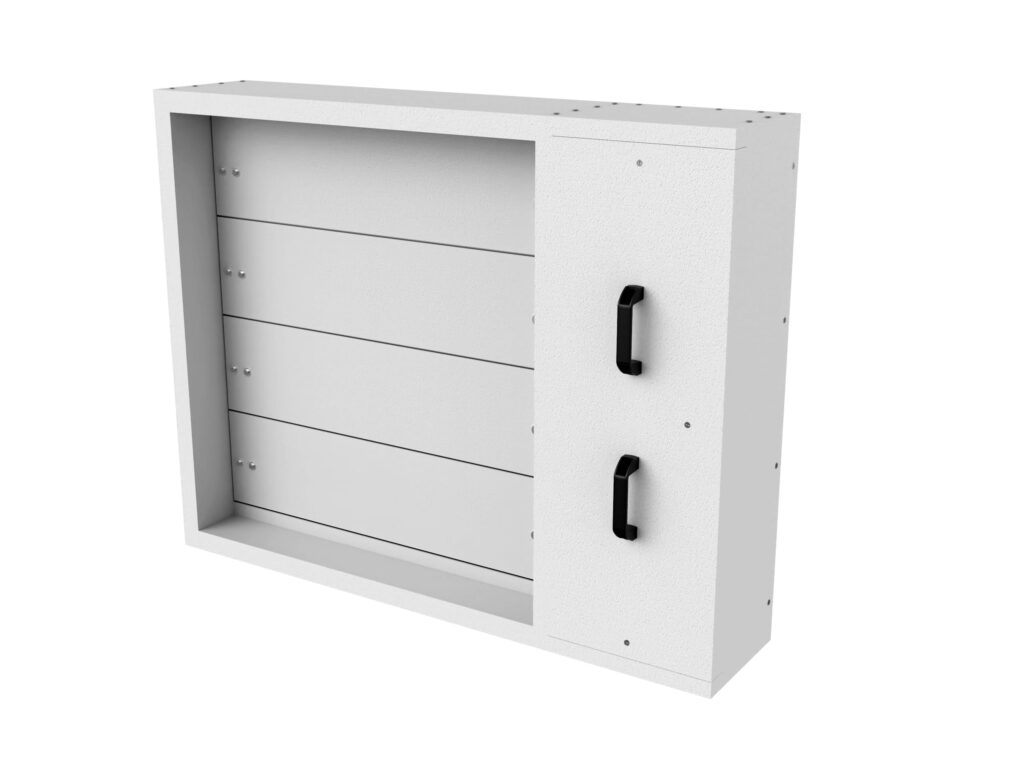
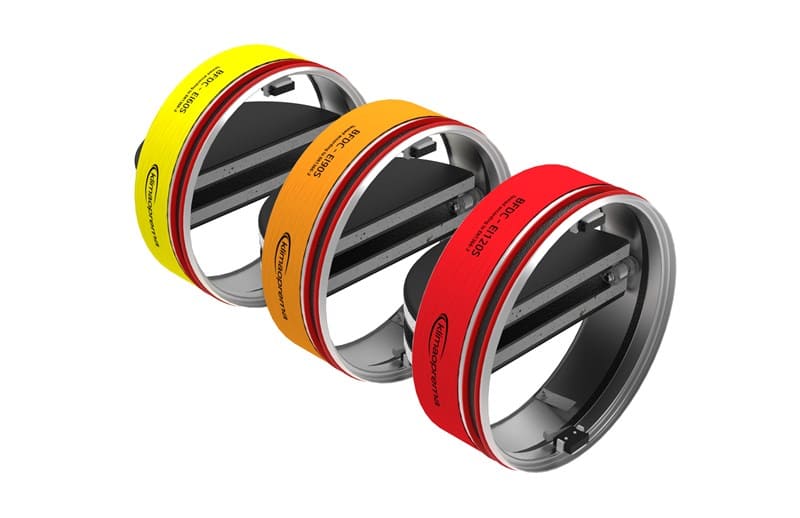
A smoke damper is a special damper installed in smoke extraction or smoke control ductwork, designed to open or close during a fire according to a defined smoke control strategy. Its purpose is to remove smoke and hot gases from escape routes and critical areas, improving conditions for evacuation and for fire-fighting operations.
A fire damper is primarily intended to stop the spread of fire and hot gases through ducts and usually closes in the event of a fire. A smoke damper is part of the smoke control system and is opened (or kept open) in specific zones to extract smoke. Standard ventilation dampers are not designed or certified for smoke control and fire safety functions.
Smoke dampers are used in smoke extraction ducts serving stairwells, escape corridors, lift lobbies, underground and multi-storey car parks, as well as large public spaces such as atriums. The exact number and location of smoke dampers are defined in the building’s fire safety and smoke control design.
A normally open smoke damper is open in normal operation and closes only when a specific signal is received. A normally closed damper is closed in normal conditions and opens only when smoke extraction is required in a particular zone. The choice between NO and NC is part of the overall smoke control concept and must be defined by the fire engineer.
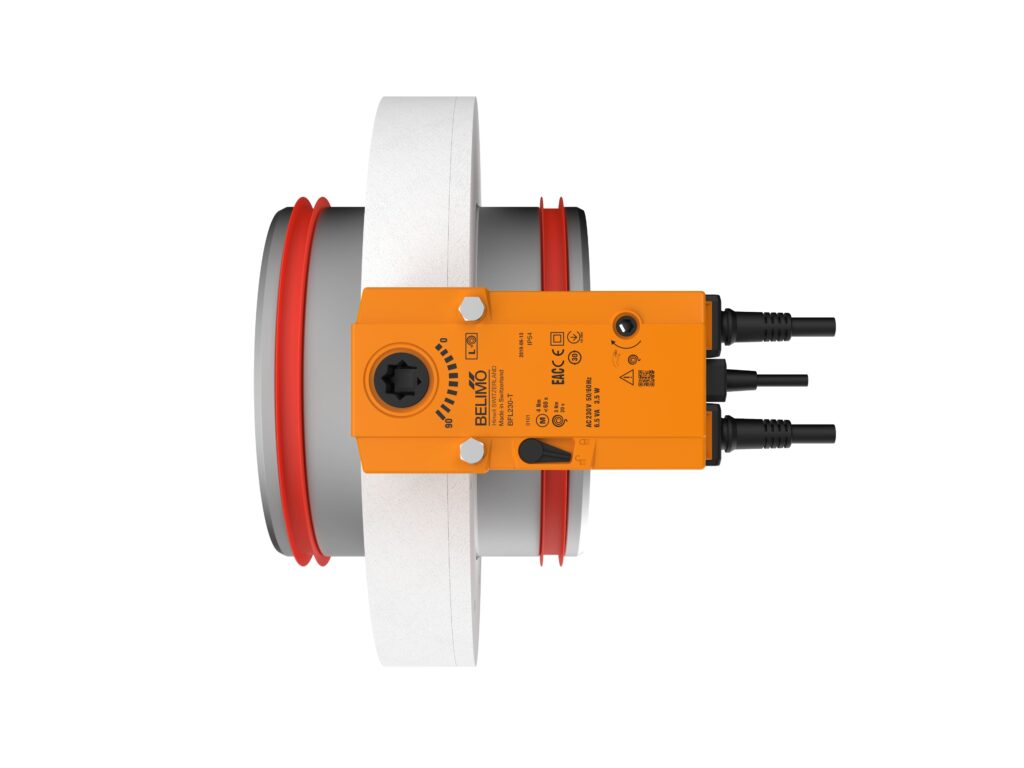
Motorised actuators allow smoke dampers to be controlled automatically by the fire alarm system, smoke control panel or building management system (BMS). Spring return actuators ensure that the damper moves to a predefined safe position in case of power failure, which is an important requirement for fire safety.
When a fire is detected, signals from detectors are processed by the fire alarm and smoke control systems, which then send commands to open or close the relevant smoke dampers according to the designed fire scenario. The status of each damper can typically be monitored via the BMS, allowing operators to see whether dampers are in the correct position and to perform test sequences.
Smoke dampers must meet defined fire resistance and leakage classes and be certified according to applicable European and national standards. Proper installation, correct connection to control systems and regular functional testing are crucial to ensure that the dampers operate as intended in the event of a fire.
Inspection and testing intervals are defined by local regulations, standards and manufacturer’s instructions, but smoke dampers are typically included in the building’s regular fire safety inspections. Tests verify damper movement, actuator function and signal transmission, and results are recorded in maintenance and fire safety documentation.
Smoke control systems and smoke dampers are part of the building’s fire protection measures, so their design, installation, commissioning and testing must be carried out by competent and authorised specialists. Unauthorised modifications can compromise system performance in a fire situation and may lead to non-compliance with fire safety regulations.
Pricing depends on damper size, design, operating mode (normally open or normally closed), actuator type, fire resistance requirements and order volume. We supply smoke dampers and fire ventilation components for projects in Estonia and, when required, also in Latvia and Lithuania as part of complete ventilation equipment deliveries.
VENT SYSTEM PROJECT OÜ (11720522), Ida-Viru County, Narva City, Narva, Oru tn 4, 20203
VENT SYSTEM PROJECT OÜ (11720522), Ida-Viru County, Narva City, Narva, Oru tn 4, 20203