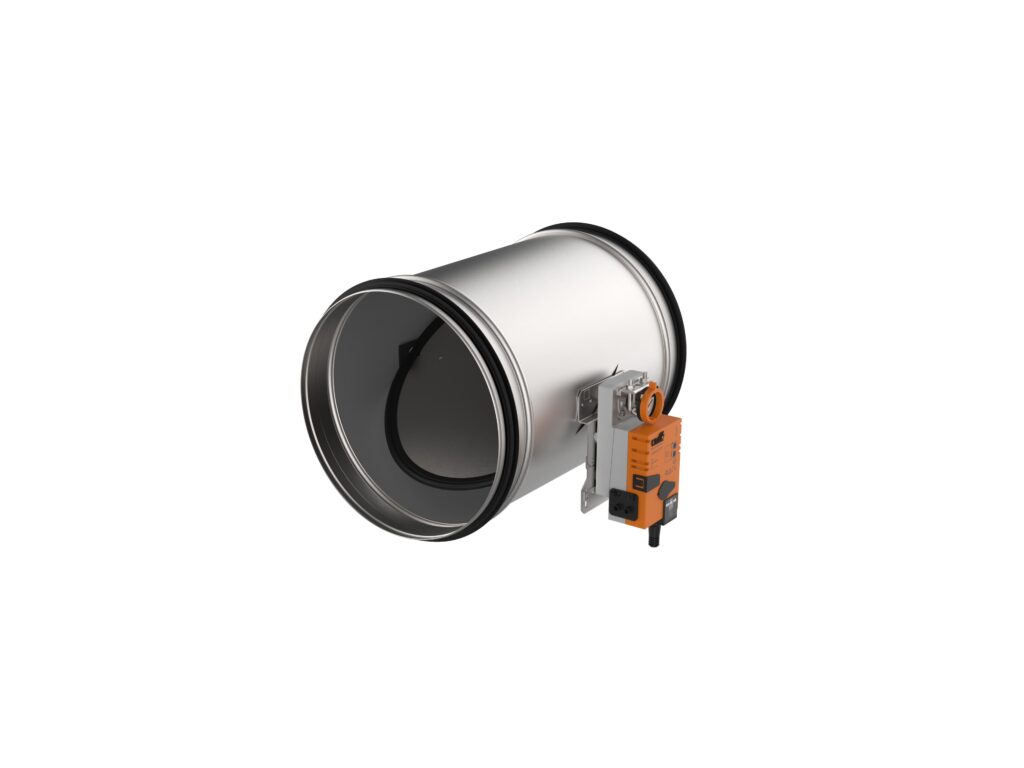
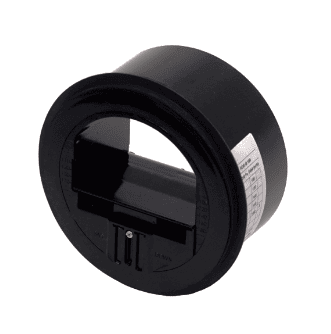
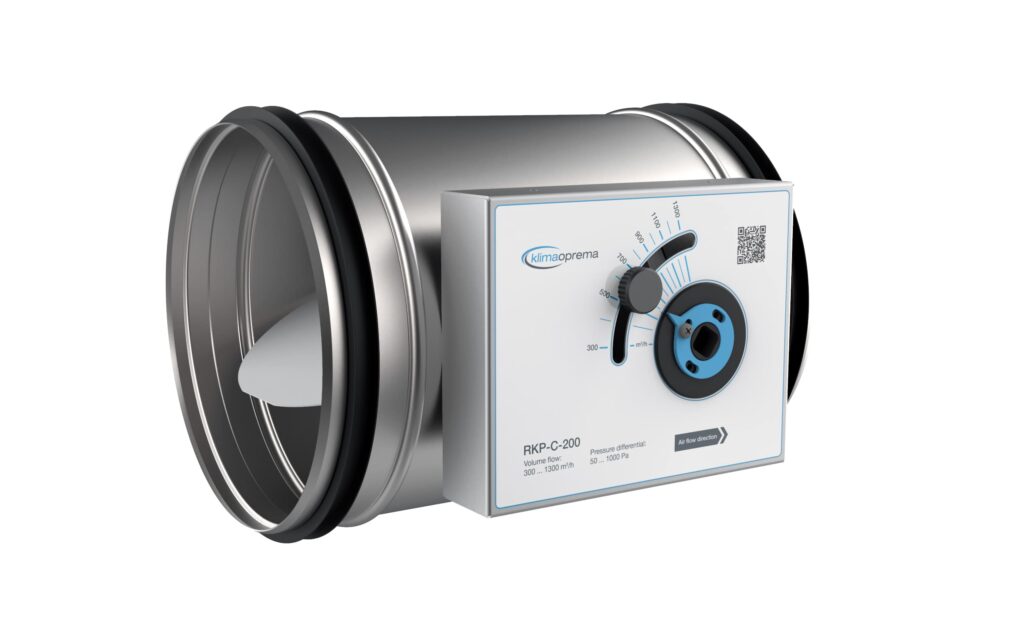
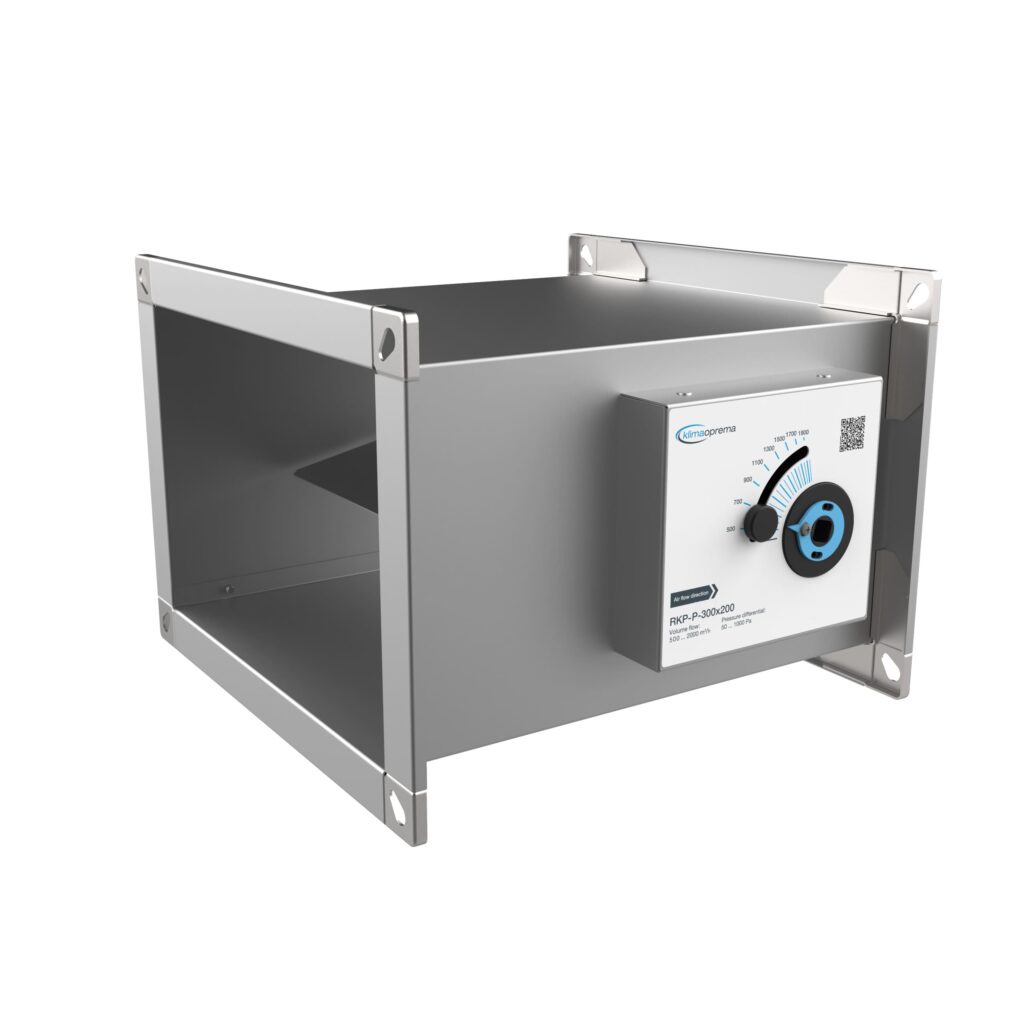
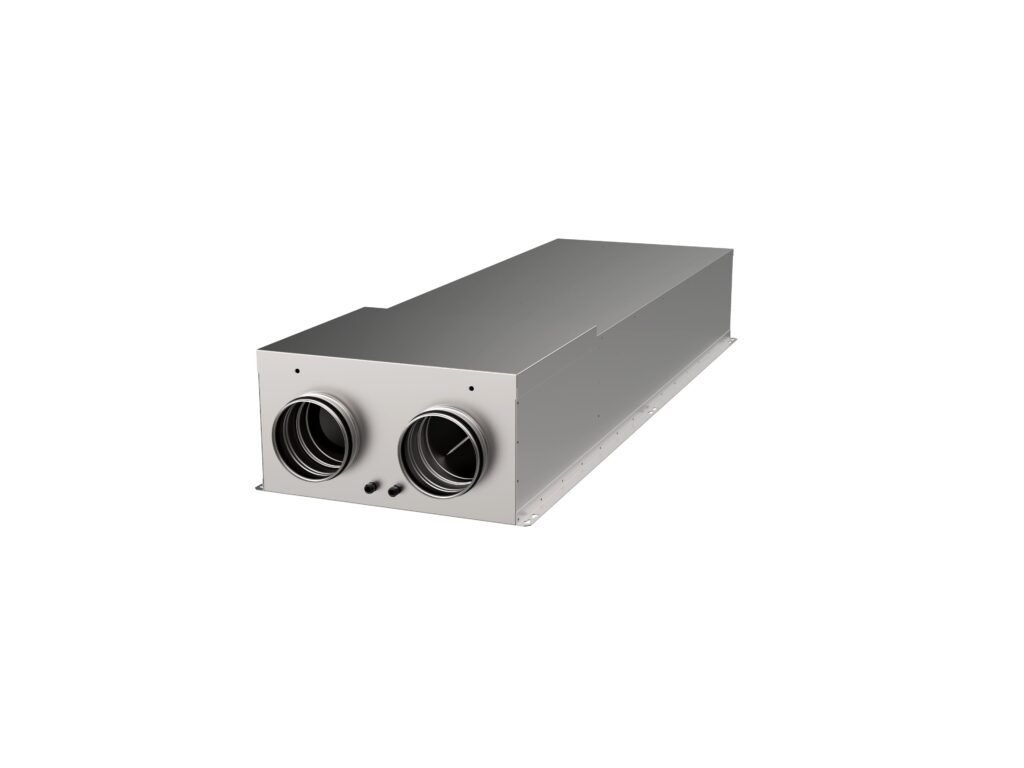
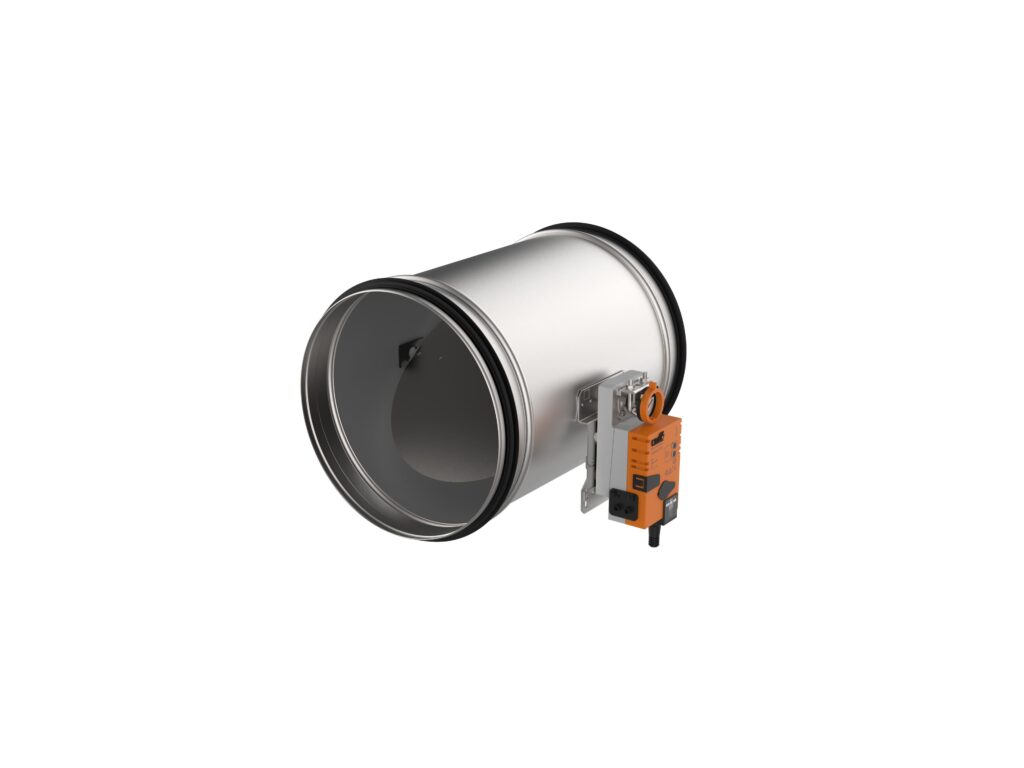
Regulating dampers for precise ventilation adjustment make it possible to balance supply and extract airflows so that each branch and room receives the designed air volume. This supports a comfortable indoor climate, prevents unwanted pressure differences between rooms and reduces unnecessary energy consumption of fans. Such solutions are essential for office, warehouse and industrial buildings with extensive duct networks.
Key benefits:
Accurate duct network balancing — regulating dampers allow airflow to be distributed evenly between branches and zones according to design.
Stable indoor climate — proper adjustment prevents overheating or overcooling of individual areas and improves comfort for occupants.
Reduced energy consumption — a balanced system requires lower fan pressure, which leads to lower electrical power usage.
High flexibility during changes — when building use or layout changes, dampers can be readjusted without replacing the ventilation system.
Integration with automation — many models support actuator mounting and integration into building management systems (BMS).
Wide range of applications — suitable for administrative buildings, logistics centres and industrial facilities with different operating regimes.
Regulating dampers for precise ventilation adjustment are installed in supply and extract duct runs and create a controllable resistance to airflow. By changing the blade position and thus the effective opening area, the airflow in a specific branch of the network is increased or reduced. This allows the system to reach the design balance without overloading the fans.
Details:
Changing the free cross-section — rotating blades or plates reduce or enlarge the free duct area, directly influencing the airflow.
Adjustment based on measurements — during commissioning, specialists measure airflow and pressure and adjust the regulating dampers step by step to reach the specified values.
Operation in complex duct networks — dampers are installed on branches, risers and mains, taking into account different duct lengths and resistances.
Manual or automatic control — dampers can be fixed in a set position or equipped with actuators controlled by the automation system.
Reduced noise and vibration — correct setting of regulating dampers lowers turbulence, sharp pressure drops and the associated noise in ducts.
Maintaining design performance over time — if operating conditions change, damper positions can be readjusted to keep the system within design parameters.
When selecting regulating dampers for precise ventilation adjustment, it is important to consider the duct layout, system type (constant or variable airflow), pressure range and automation requirements. Properly selected dampers simplify system balancing, increase energy efficiency and ensure reliable ventilation performance throughout the building’s life cycle.
What we consider when selecting:
System type and operating mode — constant volume, VAV or hybrid systems require different regulating damper designs and control strategies.
Airflow and pressure range — models are chosen with suitable characteristics for the expected velocities and pressure differentials.
Ductwork configuration and control points — we analyse where airflow needs to be controlled and how many regulating dampers are required.
Automation and control concept — we define whether manual balancing is sufficient or if actuated dampers with BMS integration are needed.
Acoustic and environmental conditions — allowable noise levels, air temperature and possible dust load influence the choice of damper design and materials.
Installation and maintenance — solutions are selected to provide convenient access for inspection, position checks and regular servicing of the dampers.


Quality and environmental management Vent System Project OÜ follows the principles of the ISO 9001 certificate.
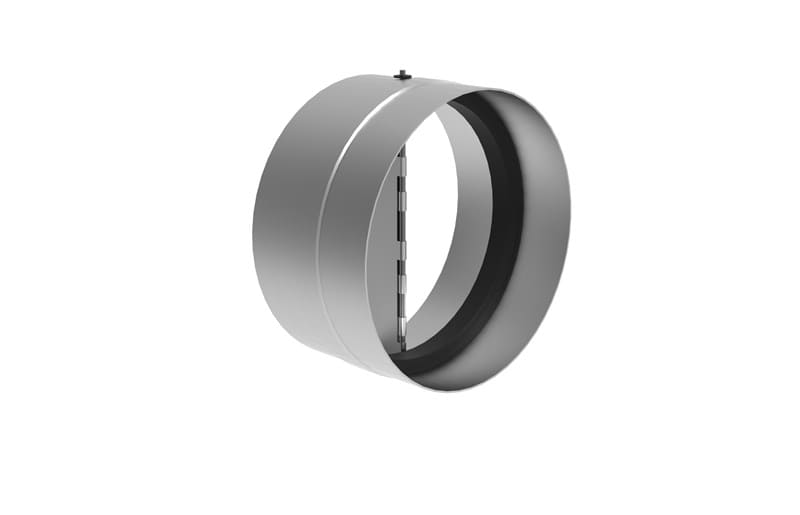
Airflow regulating dampers, often called volume control or balancing dampers, are devices installed in ductwork to adjust and fine-tune the air volume in each branch of the system. They are used to bring actual airflow in line with design values and to balance supply and extract air across different rooms and zones.
Regulating dampers are designed for precise airflow adjustment over a defined range of positions, not just open/closed. Fire and smoke dampers are safety devices that close in case of fire or smoke and are not intended for balancing. Basic shut-off dampers are typically used only to isolate sections of ductwork, not for accurate air volume control.
They are essential in most commercial and industrial ventilation systems with multiple branches, zones or floors — such as office buildings, shopping centres, warehouses, logistics hubs and production facilities. The more complex the duct network, the more critical proper balancing with volume control dampers becomes.
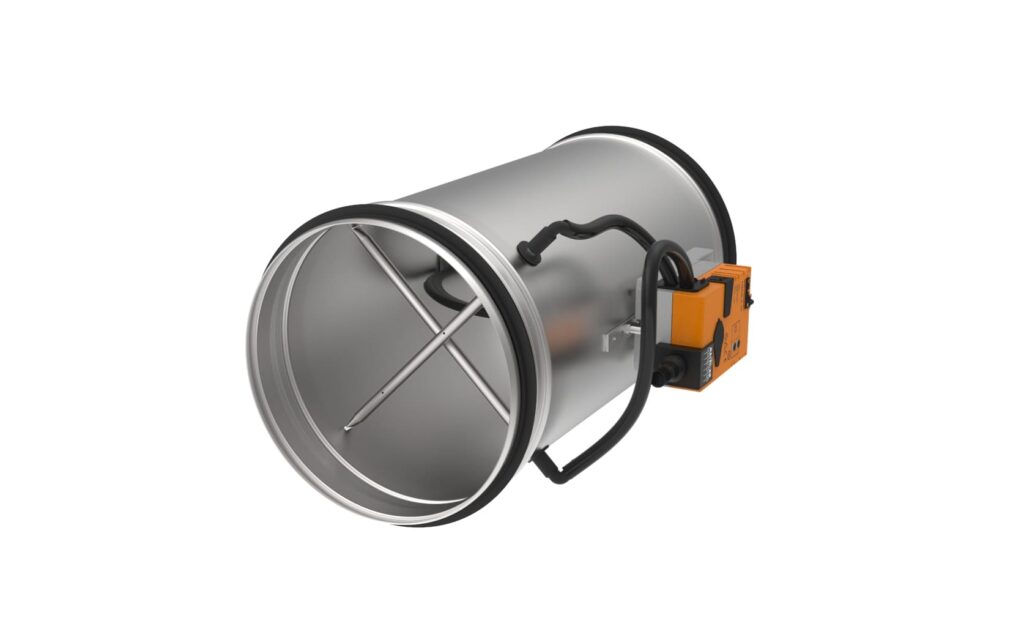
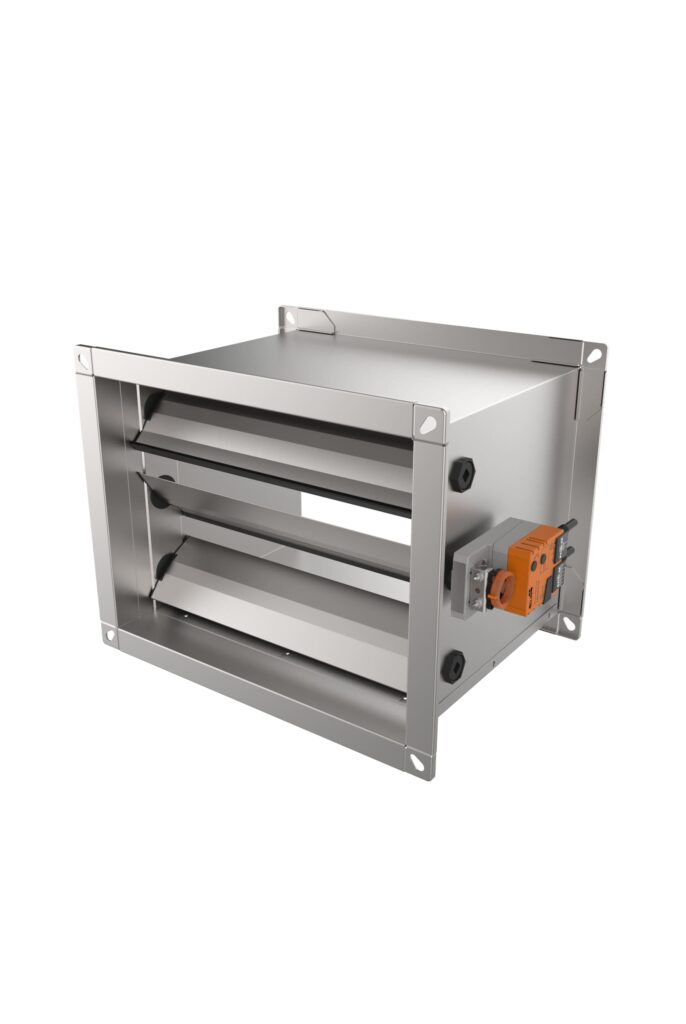
Round dampers are installed in circular ducts, while rectangular dampers are used in rectangular ductwork. Functionally they serve the same purpose, but differ in connection dimensions, housing design and sometimes blade geometry. The choice is usually determined by the duct shape at the installation point.
Manual volume control dampers are suitable where airflow is adjusted during commissioning and only needs occasional changes. Motorised dampers are used when airflow must be controlled dynamically — for example via BMS, CO₂ or temperature sensors, time schedules or demand-controlled ventilation. The decision depends on the required level of automation.
During commissioning, airflows in ducts and rooms are measured and damper positions are adjusted step by step, usually from main branches towards terminal branches. The goal is to achieve the design airflow in each branch and room. Final settings are recorded in balancing reports so that they can be checked or restored during later maintenance.
Yes. If a damper is throttled too much, air velocity and pressure drop increase, which can lead to noise in ducts and diffusers and create draughts. Over-open dampers in one branch can “steal” air from other branches, leaving some rooms under-ventilated. Correct damper settings are crucial for both thermal comfort and noise control.
Dampers themselves typically require little maintenance, but it is important to provide access for inspection, manual adjustment or actuator replacement. Access doors or removable sections should be included in the design near key dampers to make future balancing or troubleshooting possible without dismantling the ductwork.
Basic adjustments can be made by in-house staff, but without proper instruments it is difficult to see how changes in one branch affect the rest of the system. For larger or more complex systems in office and industrial buildings, we recommend using professional balancing teams who work according to the design and use calibrated measurement equipment.
The price depends on damper size and shape (round or rectangular), materials, type of blade and seal, actuator option (manual or motorised) and order volume. We supply airflow regulating dampers and volume control dampers for projects in Estonia, and when required also to Latvia and Lithuania as part of complete ventilation equipment deliveries.
VENT SYSTEM PROJECT OÜ (11720522), Ida-Viru County, Narva City, Narva, Oru tn 4, 20203
VENT SYSTEM PROJECT OÜ (11720522), Ida-Viru County, Narva City, Narva, Oru tn 4, 20203