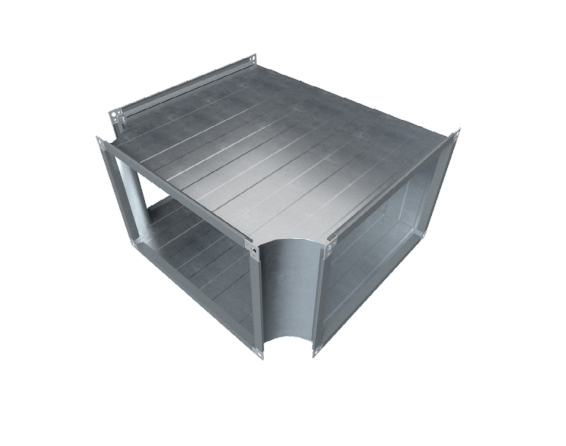
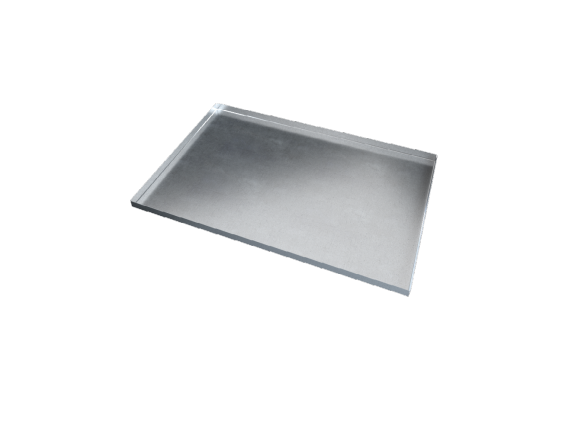
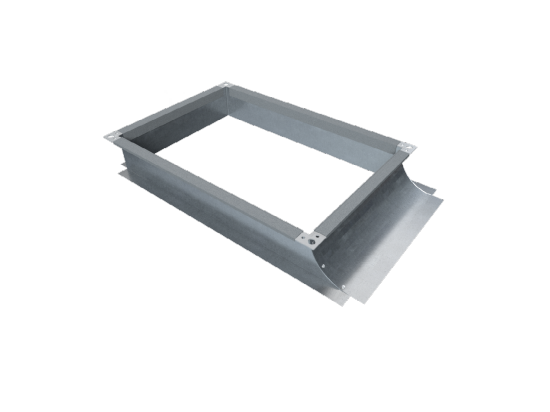
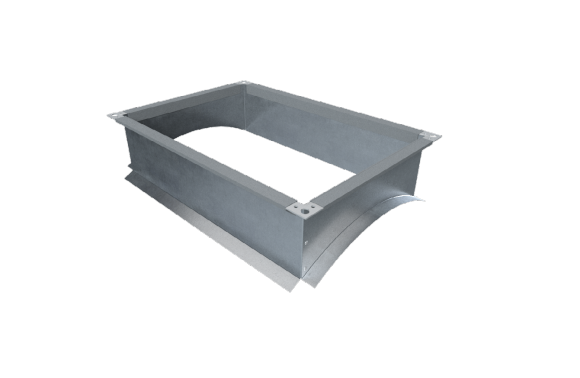
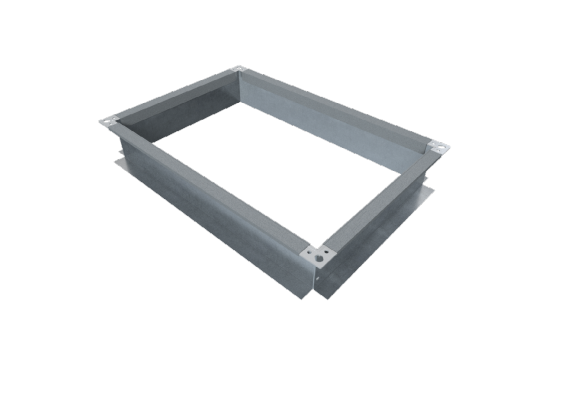
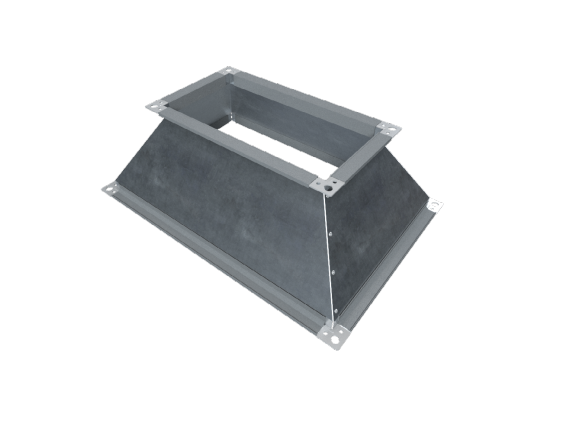
These air ducts are used for air transport and for connecting air handling units, supply and extract systems and other equipment in office, warehouse and industrial buildings. The choice of duct shape, material and cross-section has a direct impact on airflow stability, noise levels and the energy consumption of the ventilation system. High-quality ductwork helps maintain the designed airflow and minimise leakage across the network.
Key benefits:
Reliable air transport — air ducts ensure supply and extract air can be delivered over the required distances without excessive pressure losses.
Design flexibility — straight runs and complex routes with bends, branches and transitions can be created to match the building’s architecture.
Seamless integration with equipment — these air ducts are used for air transport and for connecting air handling units, supply and extract systems, filters and silencers into a single system.
Control of noise and vibration — appropriate duct sizes and air velocities help reduce aerodynamic noise and mechanical load on fans.
Improved tightness and energy efficiency — good joints and sealing reduce air leakage, allowing the system to operate at lower static pressure.
Wide choice of materials and types — galvanised steel, stainless steel, spiral and rectangular ductwork are available for different applications and operating conditions.
Air ducts form the “transport network” of ventilation and HVAC systems: they carry air from air handling units, supply and extract systems and other equipment to grilles, diffusers and ceiling outlets. In real projects, it is essential to consider duct length, bends, branches and fittings to ensure the system operates in line with the design airflow and pressure values.
Details:
Connection to air handling units — ducts take treated air from the AHU and distribute it to floors and zones throughout the building.
Creation of mains and branches — straight sections, bends and tees form the network that delivers air to each grille or diffuser.
Consideration of aerodynamic resistance — every bend, transition or damper adds pressure drop, so suitable air velocities and duct sizes are selected during design.
Thermal and acoustic insulation — where necessary, ducts are insulated to reduce heat losses, condensation and noise from the air stream.
Interaction with duct components — regulating and shut-off dampers, fire dampers and smoke dampers are integrated into the duct system and influence its balance.
Provision for inspection and cleaning — access panels and serviceable sections allow the ductwork to be inspected and cleaned during operation.
When selecting air ducts, it is important to consider building use, required airflow rates, duct run lengths and the space available for installation. Properly sized ductwork with appropriate materials and layouts reduces pressure losses and noise and provides convenient access for maintenance over the life of the system.
What we consider when selecting:
Building type and operating regime — offices, warehouses, production halls, car parks and shopping centres require different air velocities and tightness classes.
Air volume and duct length — these parameters define duct diameter or rectangular size and the choice between spiral and longitudinally seamed ducts.
Space and height constraints — beams, other building services and ceiling constructions are taken into account when routing ductwork.
Material and corrosion resistance — galvanised or stainless steel and other materials are chosen according to humidity and environmental conditions.
Required tightness class and leakage limits — higher tightness classes are selected for energy-efficient buildings and systems with higher pressures.
Ease of installation and maintenance — we plan access to joints, hangers, access panels and control devices to simplify future servicing of the system.


Quality and environmental management Vent System Project OÜ follows the principles of the ISO 9001 certificate.
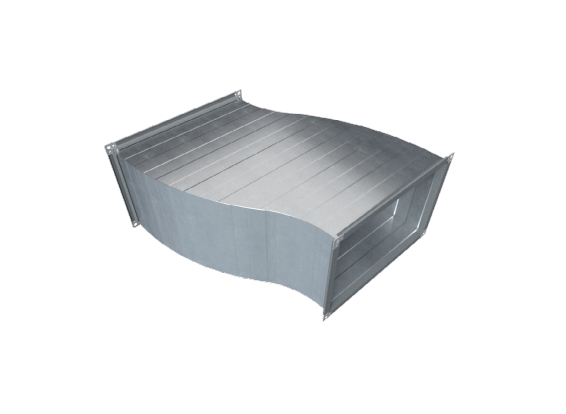
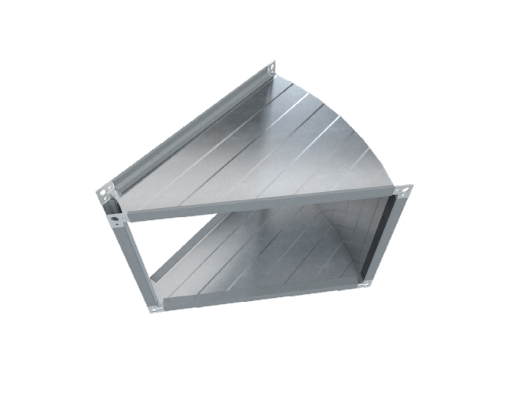
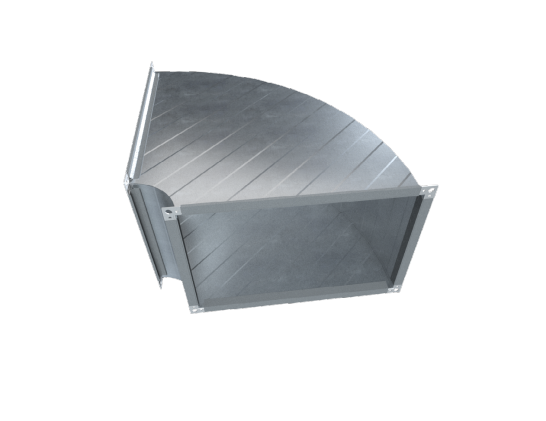
Rectangular ducting VSP is a system of galvanised steel ventilation ducts and fittings with rectangular cross-sections, designed for supply, extract and general ventilation in buildings. It is used in warehouses, logistics centres, office buildings, shopping centres and industrial facilities.
Circular or spiral ducts usually offer slightly better aerodynamic performance and are easy to suspend. Rectangular ducting, on the other hand, is often the better choice where space is limited: above suspended ceilings, in shafts and tight technical corridors. It allows the designer to fit the required duct area into restricted width or height.
VSP rectangular ducts are typically made from galvanised steel with a sheet thickness selected according to duct size and system pressure. Galvanising protects against corrosion and, together with proper jointing, ensures mechanical strength and tightness for long-term operation in commercial and industrial buildings.
Rectangular ducting systems are based on standard width and height increments, which simplifies design and the use of standard fittings. However, custom sizes can be manufactured for specific projects as long as they comply with production capabilities and the required strength and leakage classes.
Pressure loss and noise are mainly influenced by air velocity, duct length, number of fittings and surface quality rather than shape alone. If air velocities and duct sizes are selected correctly, VSP rectangular ducting provides acceptable pressure losses and sound levels that match the ventilation design.
Where rectangular ducting passes through unheated spaces, carries chilled air or is connected to noisy equipment, thermal and/or acoustic insulation is recommended. Thermal insulation reduces energy losses and prevents condensation, while acoustic insulation limits noise transmission from fans and airflows into occupied spaces.
Airtightness depends on the quality of flanges, gaskets and fixings used at duct joints. The VSP system is designed with compatible connection components that make it possible to achieve defined leakage classes. Correct installation and tightening of all joints are essential for energy-efficient ventilation systems.
Ductwork is suspended from the building structure using hangers, threaded rods, channels and brackets sized for the weight of the duct and insulation. During design, access to inspection openings, dampers and equipment is planned in advance to make commissioning and maintenance possible throughout the system’s life.
Cleaning and maintenance are carried out via access doors and inspection openings installed at strategic points in the duct system. The required frequency depends on the building use, filtration level and hygiene requirements, but larger systems usually follow a planned maintenance schedule and relevant standards.
VSP rectangular ducting is supplied primarily to projects in Estonia and, where required, also to Latvia and Lithuania. Pricing depends on duct dimensions, sheet thickness, volume of the order, any insulation or special components and transport to the site. Project quotations are prepared based on detailed specifications and delivery schedules.
VENT SYSTEM PROJECT OÜ (11720522), Ida-Viru County, Narva City, Narva, Oru tn 4, 20203
VENT SYSTEM PROJECT OÜ (11720522), Ida-Viru County, Narva City, Narva, Oru tn 4, 20203