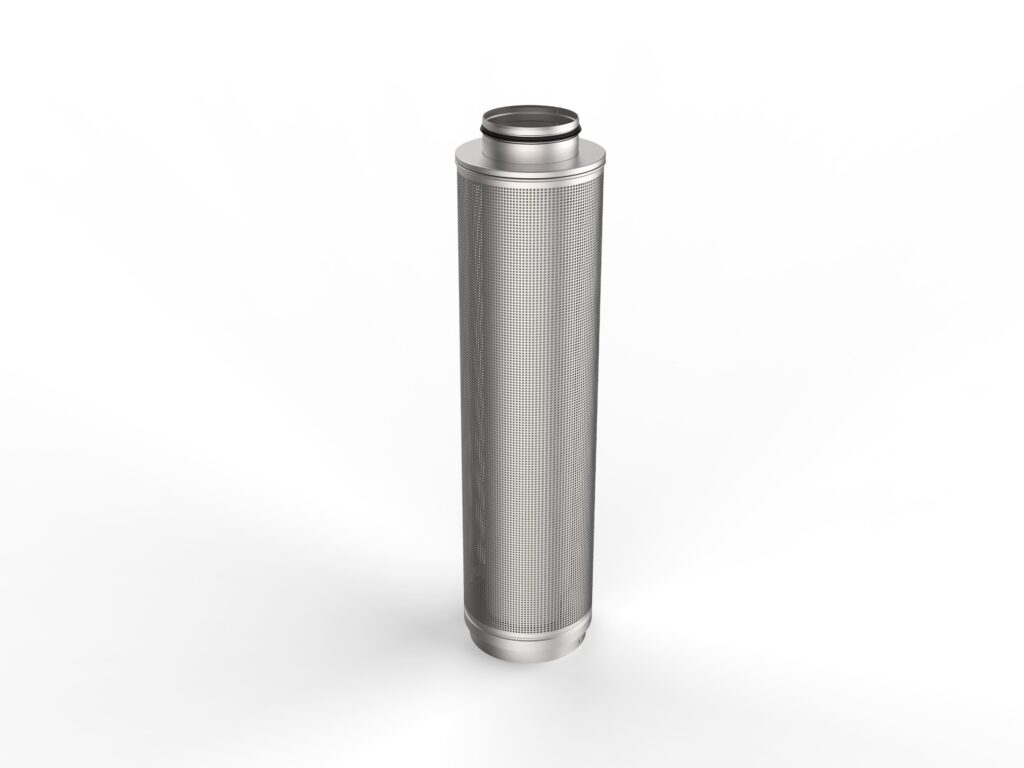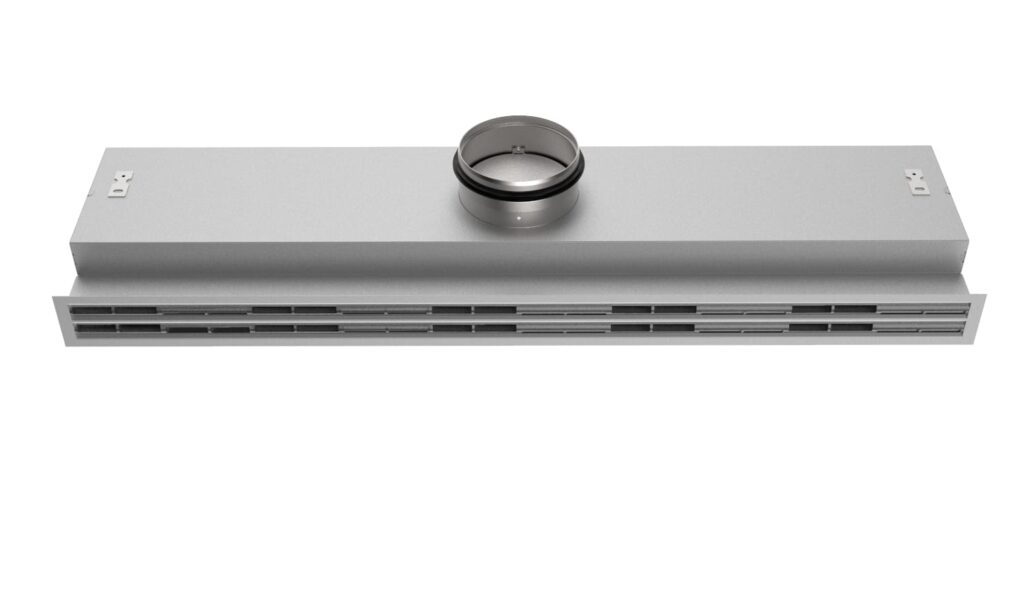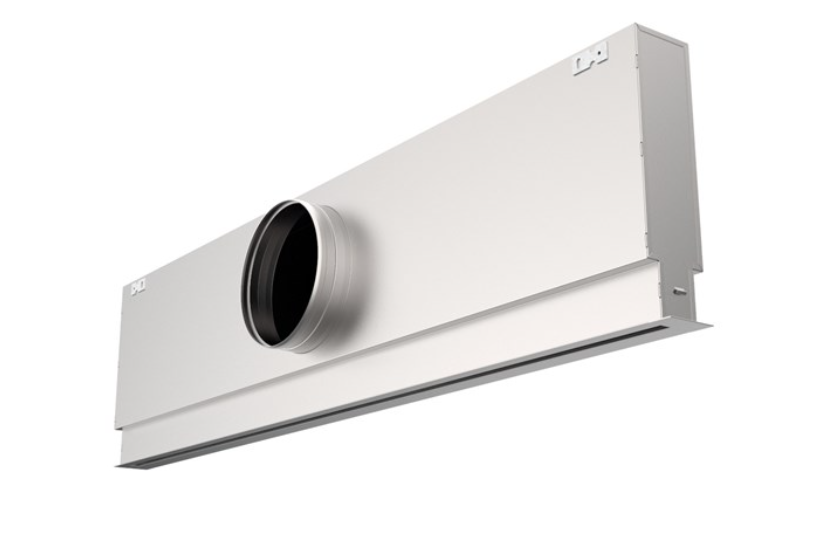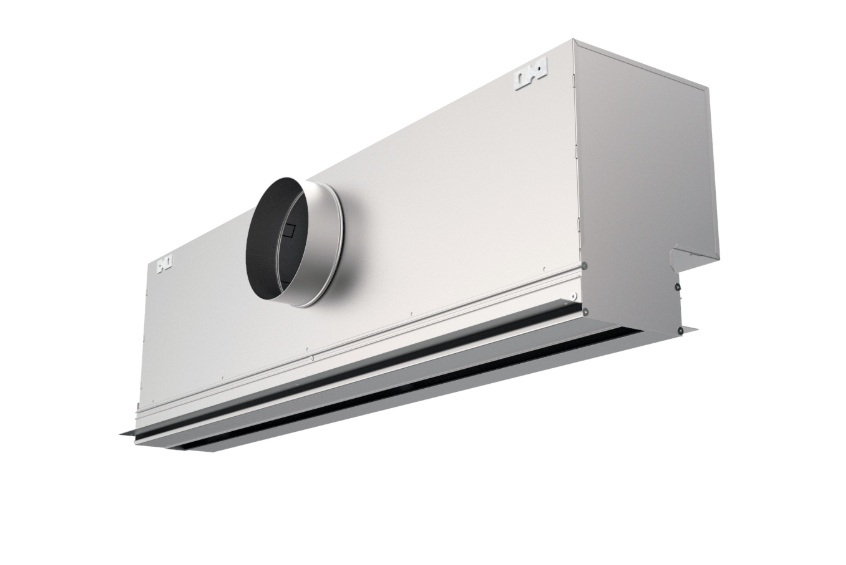
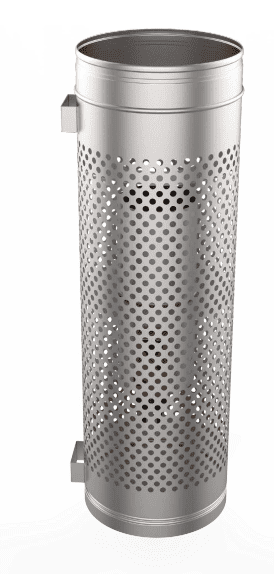
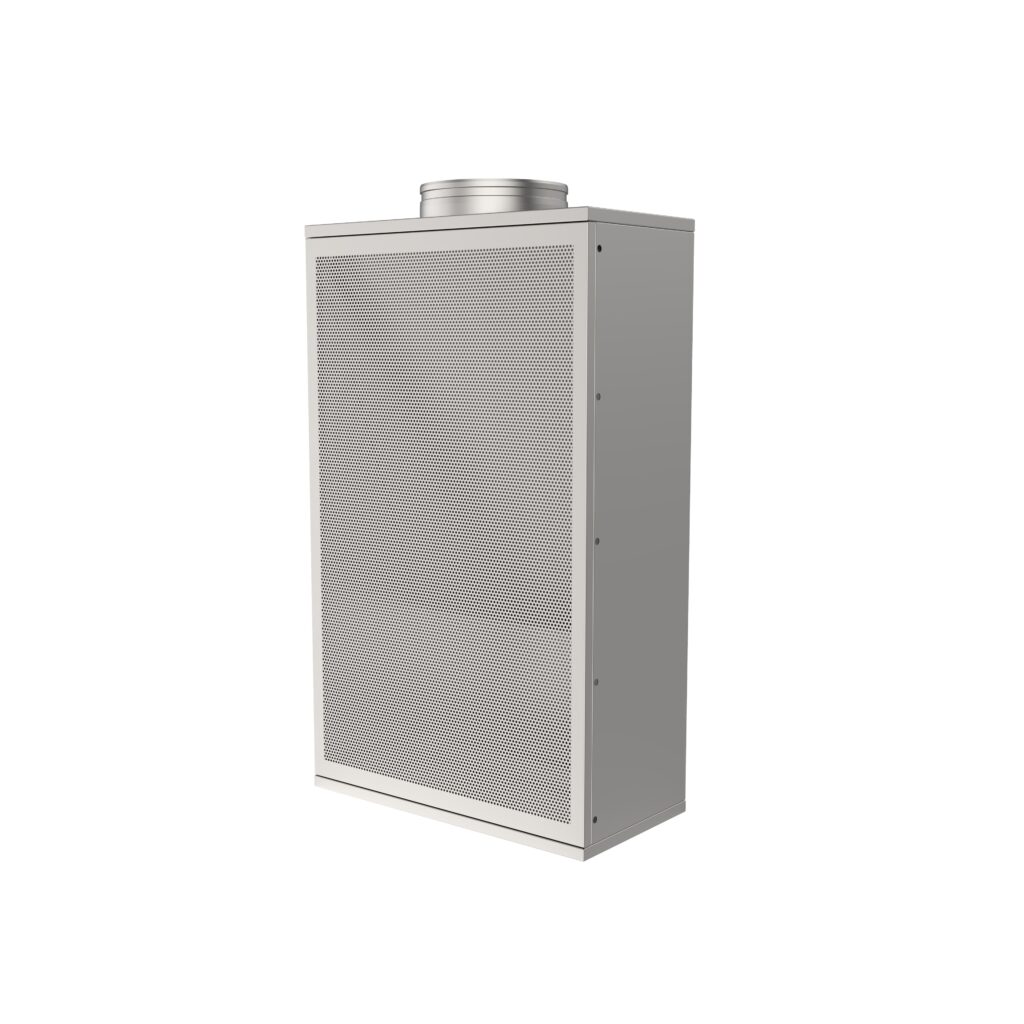
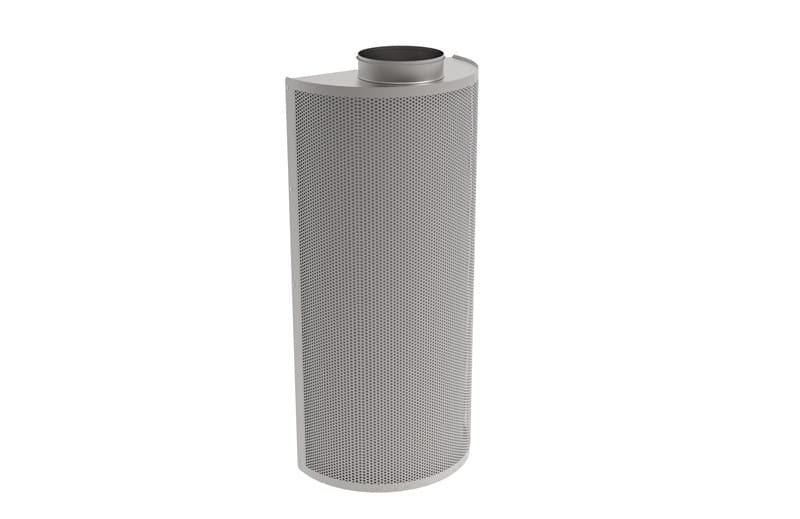
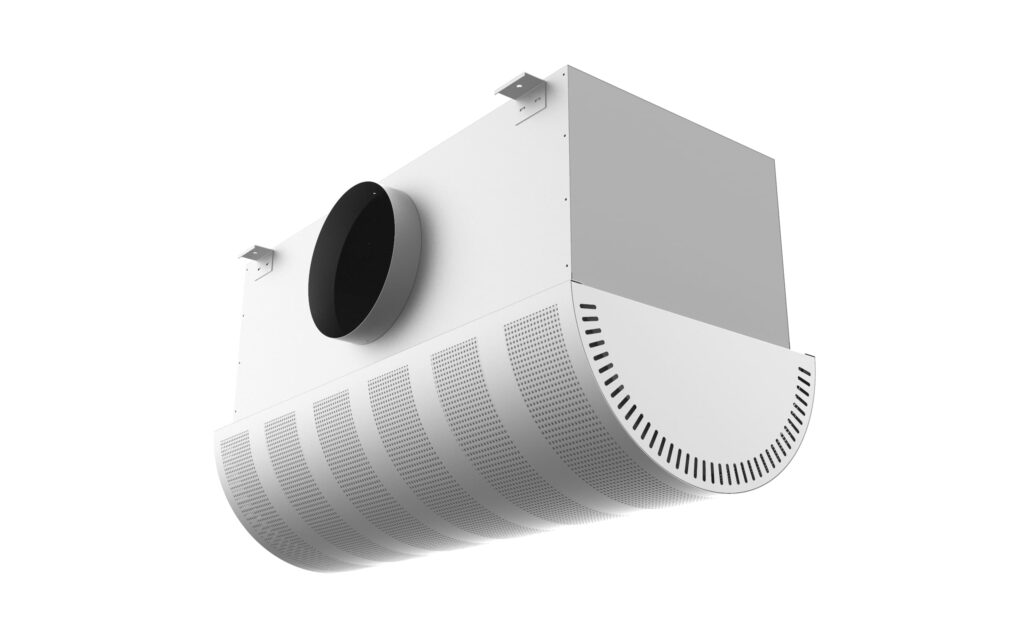
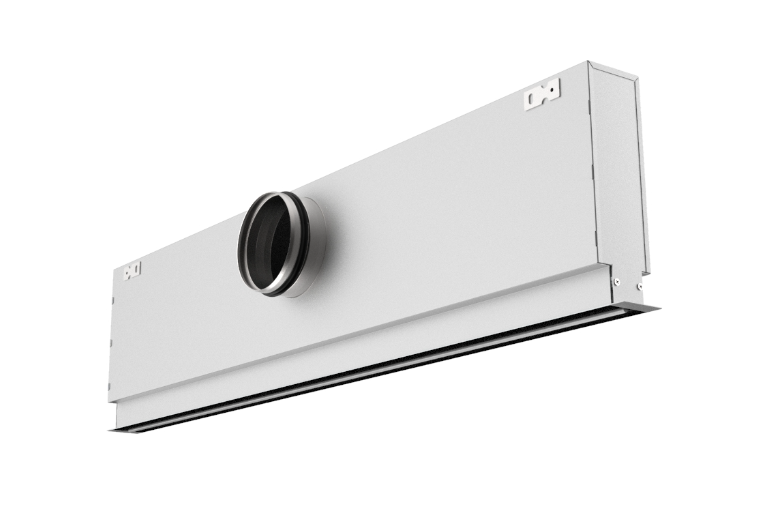
Ventilation diffusers for even air distribution provide smooth supply and effective extract air patterns in a wide range of indoor spaces. They help prevent draughts and local temperature variations, maintaining a comfortable indoor climate and improving the efficiency of professional supply and extract systems. These solutions are ideal for offices, warehouses, production facilities and other commercial buildings.
Key benefits:
Uniform air distribution throughout the room — diffuser geometry spreads the air evenly, minimising stagnant areas and uneven ventilation.
Reduced draughts in occupied zones — ventilation diffusers for even air distribution keep air velocities low where people work or stay.
Stable indoor climate — temperature, humidity and air change rates remain within the required range in different parts of the room.
Lower outlet noise — optimised shapes reduce aerodynamic noise, making the operation of the ventilation system less noticeable.
Flexible use across applications — suitable for administrative buildings, retail areas, storage spaces and industrial halls.
Clean, unobtrusive design — diffusers integrate neatly into ceiling systems and interior finishes.
Ventilation diffusers for even air distribution are installed at ceiling level or at duct terminals in supply air systems and, in some cases, extract systems. Air enters the diffuser plenum, where the flow is calmed and equalised, and then leaves through slots, rings or nozzles into the room. This creates a wide, gentle air pattern that mixes effectively with room air and avoids cold or hot spots.
Details:
Air calming and distribution in the plenum — air from the duct is directed into the diffuser body, where its velocity is reduced and the flow is evenly spread.
Induction and mixing with room air — the outlet pattern induces room air into the jet, promoting rapid mixing and equalisation of indoor climate parameters.
Stable performance at varying airflows — the construction of ventilation diffusers allows consistent distribution even when the air handling unit operates at different load levels.
Comfortable air velocities in occupied zones — with correctly sized and adjusted diffusers, air reaches occupants at low velocities.
Integration with VAV and control systems — diffusers can be used together with volume control devices and automation that balance airflow between zones.
Support for stable system operation — balanced air distribution reduces pressure imbalances and noise problems in the duct system.
When selecting ventilation diffusers for even air distribution, it is essential to consider the room function, ceiling height, design airflow and acoustic criteria. Proper selection of diffuser types, quantities and locations ensures a comfortable indoor environment and efficient system performance without complaints about draughts or noise.
What we consider when selecting:
Room type and operating conditions — offices, warehouses, production halls, retail areas and meeting rooms require different air distribution concepts.
Air volume and mounting height — these parameters define diffuser diameter, type and the number of units per zone.
Required throw pattern — radial, swirl or directional diffusers are chosen according to the layout and position of heat sources and loads.
Noise limits and acoustic requirements — where low noise is critical, diffusers with optimised geometry and restricted outlet velocities are used.
Ceiling construction and duct arrangement — suspended ceilings, ceiling voids and duct routing are taken into account when choosing connection details.
Maintenance and access — solutions are selected to provide easy access for cleaning and any necessary adjustment of air distribution elements.


Quality and environmental management Vent System Project OÜ follows the principles of the ISO 9001 certificate.
An air diffuser is an air distribution device used in ventilation systems to supply or extract air evenly into a room. Unlike a simple ventilation grille, an air diffuser shapes the air distribution pattern, reduces draughts and helps to achieve a more uniform air distribution in the occupied zone.
In air distribution systems you will find circular and rectangular ceiling air diffusers, slot diffusers, swirl diffusers and special air distribution devices for clean rooms and process areas. The right type of diffuser is selected based on ceiling height, airflow, type of space (warehouse, industrial hall, office, retail area) and required comfort level.
Air diffusers are used in all kinds of buildings: offices, shopping centres, warehouses, logistics terminals, production halls and public spaces. For industrial air distribution in warehouses and production areas, more robust air diffusers with higher airflow capacity and better resistance to dirt are typically chosen.
The size and type of air diffuser depend on the required airflow, ceiling height, air distribution pattern and acceptable air velocity. Selection is usually based on manufacturer’s data or engineering calculations that consider airflow, pressure and sound level. You can send us your project drawings or basic ventilation data and we will help you select suitable air diffusers for your facilities in Estonia (and, if needed, Latvia and Lithuania).
Many air diffuser ranges are designed for both supply and extract air applications, which simplifies the design and visual appearance of the air distribution system. However, it is important to follow the manufacturer’s recommendations regarding maximum airflow and operating mode to maintain proper air distribution, comfort and required ventilation rates.
Air diffusers are made of steel, aluminium, galvanized or stainless steel and non-combustible composite materials. Painted steel or aluminium diffusers are commonly used in offices and retail areas, while warehouses and industrial halls often require more robust and corrosion-resistant diffusers designed for higher airflows and tougher operating conditions.
Correctly selected air diffusers help to reduce air velocity in the occupied zone and minimise uncomfortable draughts. If too much airflow is forced through a small diffuser, noise levels and discomfort can increase significantly. That is why air diffusers in industrial and commercial ventilation systems are always selected with both airflow and maximum sound level in mind.
Cleaning intervals depend on air cleanliness and operating hours of the ventilation system, but in most industrial and commercial buildings air diffusers should be inspected and cleaned at least every 6–12 months. In many cases it is enough to wipe visible surfaces with a soft cloth and mild detergent; if necessary, internal parts can also be cleaned to remove accumulated dust and dirt.
Basic diffuser installation is not very complicated, but in industrial air distribution systems the correct mounting height, orientation, adjustment and airtight connection to the ductwork are critical. For projects in Estonia we recommend using professional installers or our service team to avoid problems with noise, draughts and uneven air distribution.
Our primary market is Estonia, but we also supply air diffusers and other air distribution products to Latvia and Lithuania. Delivery times depend on stock availability and order size: standard air diffusers are often available for quick shipment, while large orders and special executions are delivered according to an agreed schedule.
VENT SYSTEM PROJECT OÜ (11720522), Ida-Viru County, Narva City, Narva, Oru tn 4, 20203
VENT SYSTEM PROJECT OÜ (11720522), Ida-Viru County, Narva City, Narva, Oru tn 4, 20203